Hygiene & Infection prevention
This section outlines simple steps that will assist you in maintaining your skin health.
The body's largest organ is the skin and healthy intact skin is an important barrier against most pathogens.
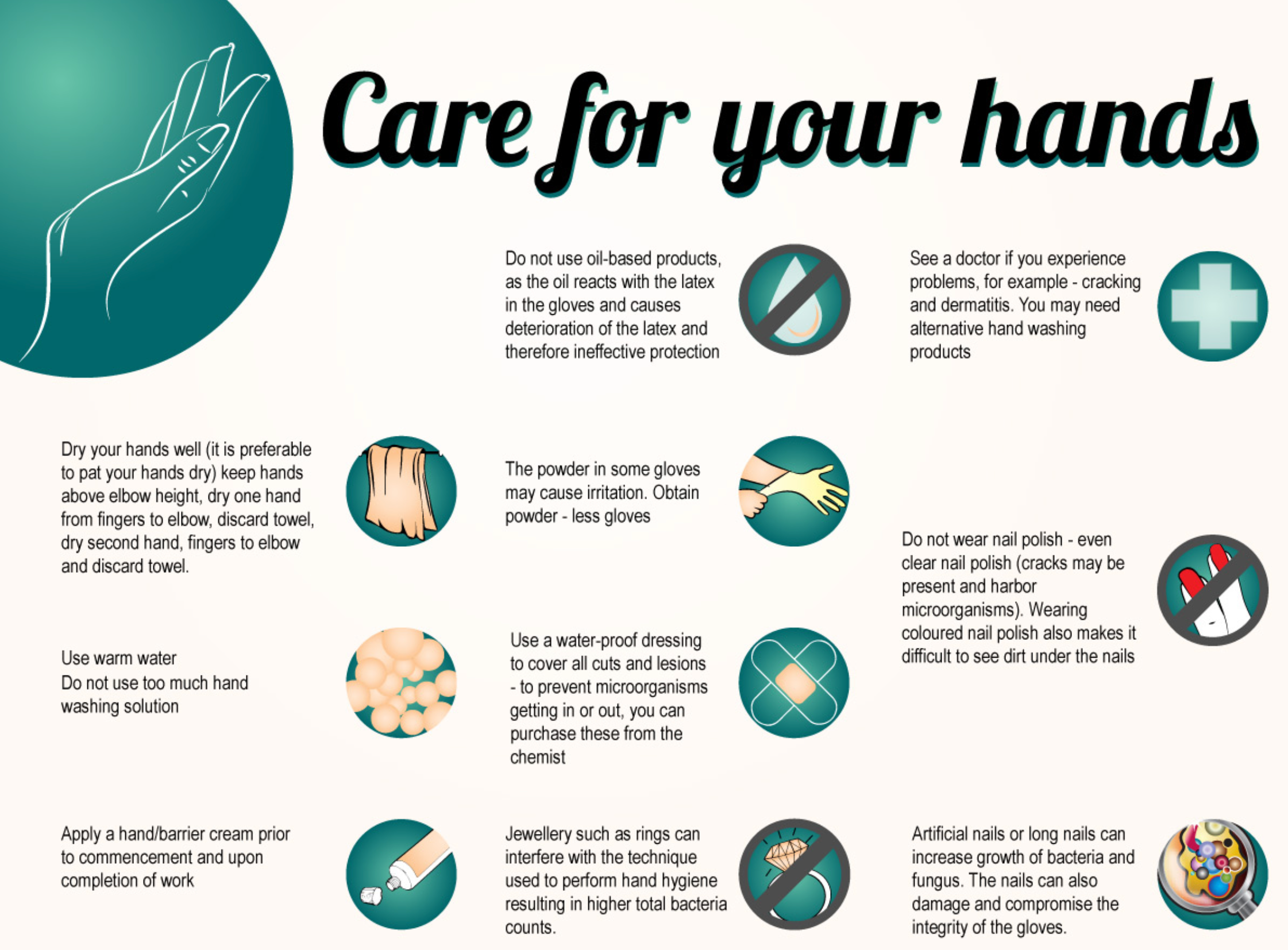
Drinking plenty of water to keep the skin moist as well as using creams or moisturisers on dry skin are two ways to prevent peeling, cracking, or chaffing. Before commencing your session, it is wise to give exposed skin a thorough examination to see if there are any cuts or open sores.
Live a healthy lifestyle
The healthier you are the better chance your body has of defending itself against pathogens. People who are already suffering from other illnesses are more prone to getting infections because their bodies are weakened by another illness.
Your immune system works to destroy pathogens, which enter the body. It can be strengthened by:
Eating a nutritious diet;
Coping with stress in your life; and
Getting sufficient rest.
All these factors help you to become a less susceptible host.
Infection: What is it?
We live in a world where microorganisms, animals, and plants are constantly interacting to survive. Sometimes this leads to infection, especially in the ongoing interaction between microbes and humans.
Microorganisms that can cause disease are called pathogens. Infection happens when these germs enter the body, settle in tissues, and begin to multiply.
Microbes are found everywhere—in soil, water, air, food, and on living things. There are thousands of types, and most are harmless or even helpful. In fact, about 87% of microorganisms do not cause disease.
Many of these helpful microbes live naturally on our skin and inside our body, especially in the gut and airways. This is called the normal flora. They protect us by preventing harmful germs from taking over.
However, if this normal balance is disrupted—such as by antibiotics—harmful microbes may grow more easily and cause infection.
Infections can be local or systemic:
A local infection stays in one area of the body, such as a wound, tattoo or piercing site. It may cause redness, heat, swelling, pain, and sometimes pus. If it worsens, it may need antibiotics or removal of the source (like a piercing), and it can sometimes leave scars.
A systemic infection spreads through the body, often entering the bloodstream. It can affect major organs like the brain (meningitis), heart (myocarditis), or the blood itself (septicaemia). These infections are serious and may require hospital treatment, including antibiotics given directly into the bloodstream. In severe cases, they can be life-threatening.
Infectious or communicable diseases are illnesses caused by germs that can spread from one person to another, such as Hepatitis B or HIV.
Whether a person gets sick depends on the strength of the germ and how well the body’s defenses protect against it, including healthy skin and immune function. Risk is higher in unhealthy conditions or poor hygiene environments.
Germs don’t move on their own—they spread through contact, especially via hands or contaminated objects. For example, touching a contaminated surface and then touching your tattoo can transfer germs and cause infection.